
Timing the Rains: Seedlings Roll Out as Phase X of Schools Green Initiative Takes Root in Eastern Kenya
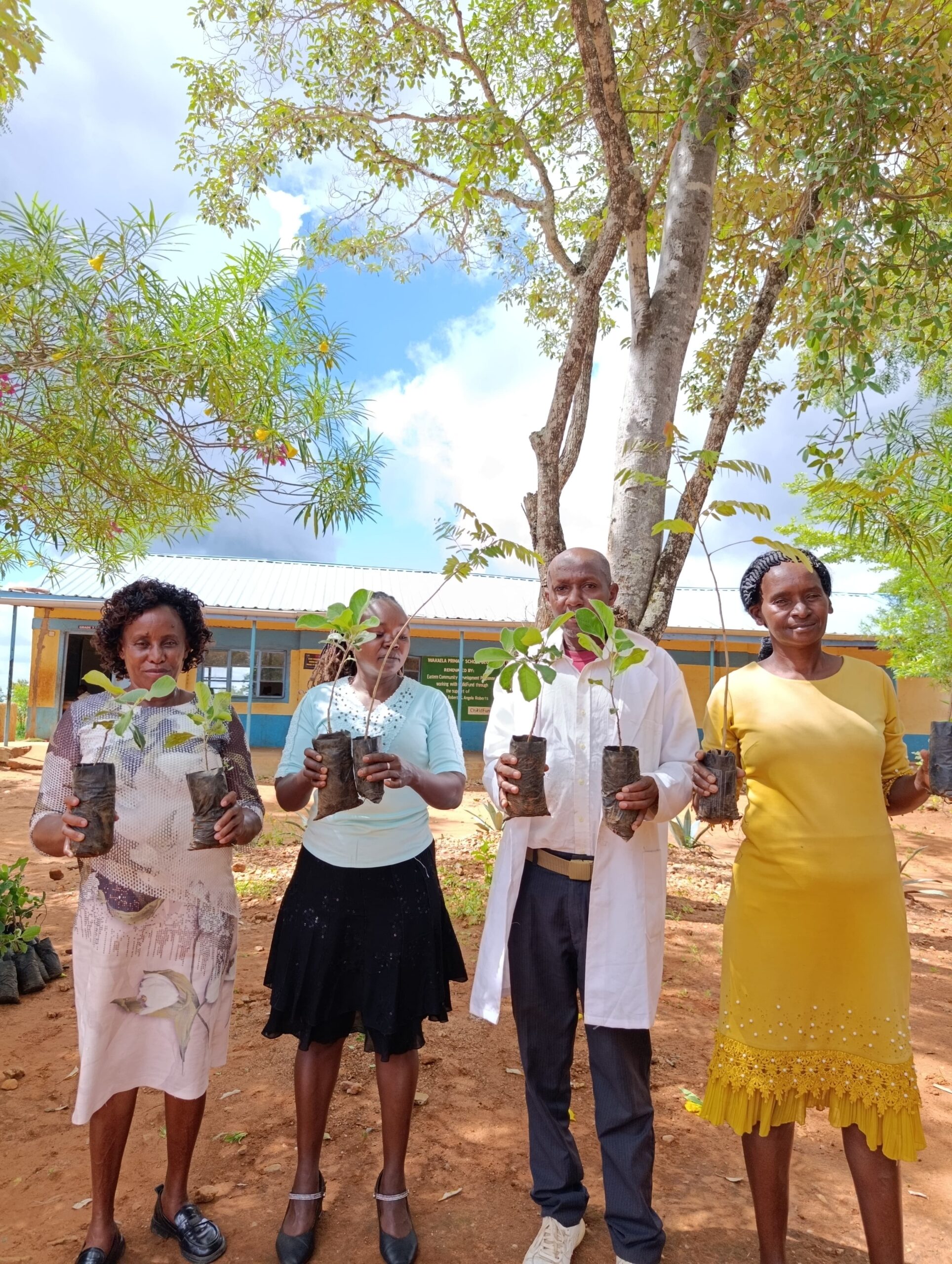
As the first clouds of the long rains gathered over eastern Kenya in early March, a quieter, deliberate operation was already underway on the ground. Across schools in Machakos and Kitui counties, thousands of tree seedlings were being carefully distributed—timed with precision to meet the rains, and with them, the promise of survival.
This marked the official rollout of Phase X of the Schools Green Initiative Challenge (GIC), a flagship afforestation programme led by the KenGen Foundation in partnership with Better Globe Forestry and KenGen PLC. Now entering a new cycle, the initiative continues to transform school compounds into living laboratories of climate action in some of Kenya’s most climate-vulnerable regions.
The distribution exercise, conducted in the first days of March 2026, followed closely on the heels of a capacity-building programme for 200 “green teachers.” With training completed, the focus shifted swiftly from knowledge to action—placing seedlings in the hands of schools just as the rains approached, a critical factor in ensuring successful establishment in semi-arid landscapes.
Participating schools in Machakos and Kitui counties received carefully selected drought-resistant species, part of a long-term strategy to improve survival rates while delivering ecological and community value. Once planted, these seedlings will be nurtured over a two-year period, with schools competing based on survival and growth performance.
The logistics behind the distribution were as strategic as they were practical. In regions where rainfall is unpredictable and soils unforgiving, timing can determine the difference between success and failure. Deliver too early, and seedlings risk drying out; too late, and the narrow planting window closes.
“The timing of seedling distribution is critical, especially in semi-arid areas like Machakos and Kitui,” said Victor Mwango, Technical Officer at Better Globe Forestry. “By aligning delivery with the onset of the rains, we give the seedlings the best possible chance to establish strong root systems. This is not just about planting trees—it’s about ensuring they survive and thrive.”
That philosophy has come to define the GIC model. Structured as a competitive challenge, the programme goes beyond planting to emphasize care, innovation, and long-term stewardship. Schools are encouraged to adopt techniques such as mulching, water harvesting, and soil management to improve outcomes—skills that extend well beyond the classroom.
Over the years, the initiative has grown into a powerful blend of environmental education and climate resilience. Students become active participants in restoring degraded landscapes, while teachers—trained as environmental patrons—anchor the effort within school systems.
Phase X builds on that legacy, but with a sharpened focus on execution and sustainability. By integrating training, timely seedling distribution, and continuous monitoring, the programme seeks to maximize impact in regions where every tree planted carries both ecological and economic significance.
As the rains begin to fall across Machakos and Kitui, the newly planted seedlings represent more than a seasonal activity. They are the next chapter in a long-term investment—one that links classrooms to climate solutions, and young learners to the future of their environment.
In the delicate balance between rain, soil, and human effort, Phase X of the Schools Green Initiative Challenge is once again taking root—one seedling, one school, and one season at a time.