
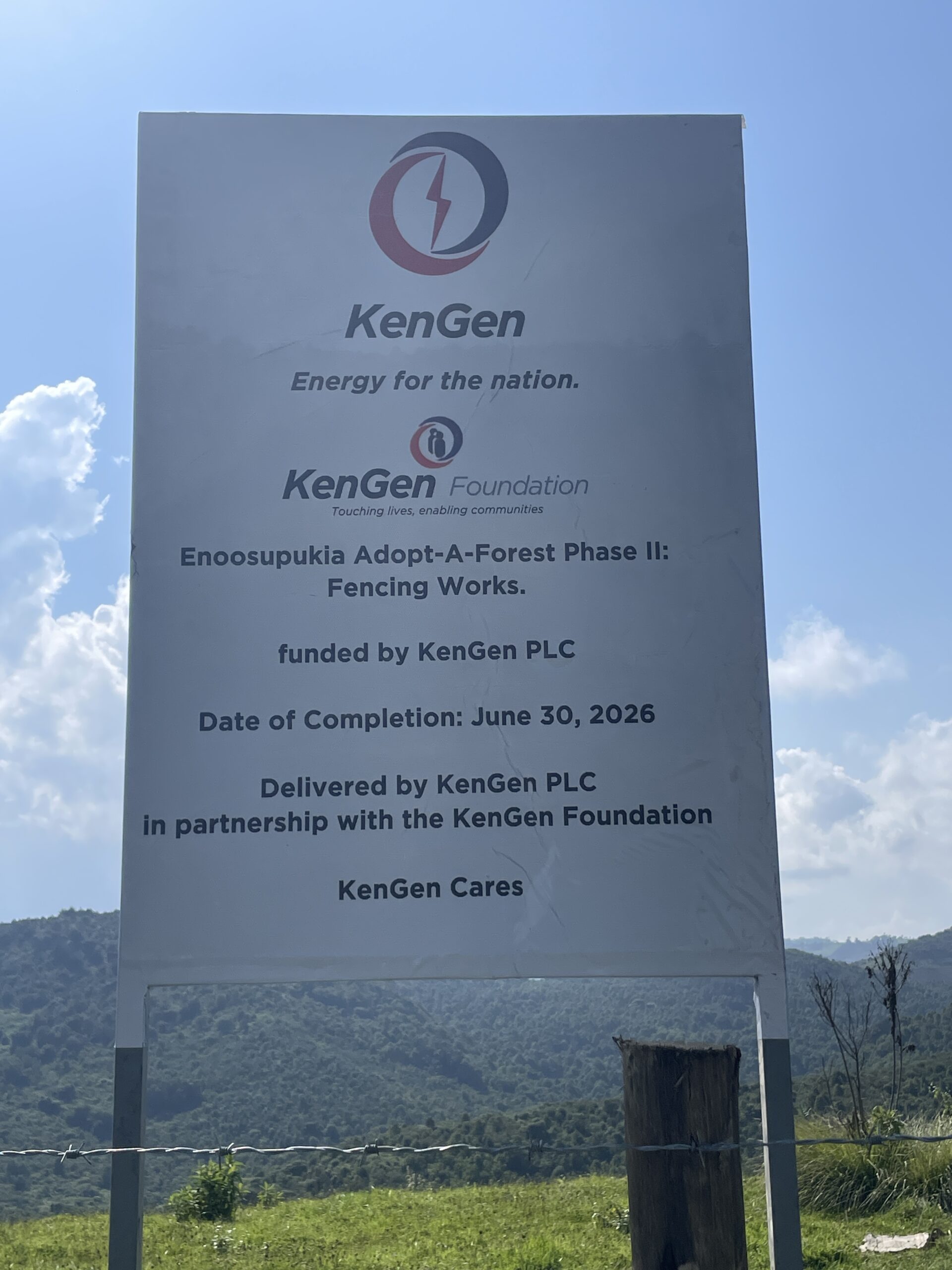
KenGen Foundation Fences Additional 10 Hectares for Enoosupukia Forest Restoration
The Enoosupukia Forest restoration effort has moved into a new phase, with an additional 10 hectares now fenced and prepared for tree planting as the KenGen Foundation and its partners advance efforts to rehabilitate the threatened forest block in Narok County.
The fencing marks a significant step in the implementation of the Enoosupukia Forest Adoption project, which seeks to restore degraded sections of the forest while strengthening its long-term conservation and management.
The newly secured area will provide a protected site for the establishment and growth of indigenous trees, helping to improve forest cover and safeguard the ecosystem’s critical water catchment functions.
Enoosupukia is one of the 22 blocks of the Mau Forest Complex and forms part of the southern section of the ecosystem. Covering approximately 11,700 hectares, the forest is among Kenya’s important closed-canopy forest areas and plays a significant role in supporting rivers and water systems serving communities and ecosystems downstream.
The latest fencing work builds on a conservation partnership between the KenGen Foundation, KenGen PLC and the Narok County Government. The three institutions are working together to address pressures facing Enoosupukia while promoting approaches that can deliver lasting environmental and community benefits.
The project’s focus extends beyond planting trees. By securing restoration areas before planting, the partners are creating conditions in which newly established indigenous seedlings can survive and mature with reduced exposure to human and livestock pressure. The approach is intended to make restoration a sustained process rather than a one-off tree-planting exercise.
The 10-hectare area forms part of the wider restoration ambitions of the Enoosupukia Forest Adoption project. The initiative is designed to progressively restore forest land through fencing, indigenous tree planting and maintenance, while supporting improved management of the wider Narok East ecosystem.
The need for such intervention is underscored by the pressures that have affected Enoosupukia over the years. Despite its ecological importance and potential to complement the conservation landscape around the Maasai Mara, the forest remains among the more threatened blocks of the Mau Complex, facing degradation associated with human activity and land-use pressures.
For KenGen, the conservation of Enoosupukia also has implications beyond the immediate forest boundary. Healthy forest catchments help regulate water flows and replenish underground water systems, supporting ecosystems and economic activities downstream. The Mau ecosystem is particularly important to Kenya’s water and energy systems, including the catchment functions that support hydropower and geothermal resources.
The Foundation is also positioning the project as an opportunity to involve communities in conservation while linking environmental restoration with livelihoods. Through capacity building and the promotion of nature-based and forest-related enterprises, the initiative seeks to give communities a greater stake in protecting the forest and sustaining the benefits it provides.
With the additional 10 hectares now fenced, the next stage is to prepare the site for planting and establish indigenous seedlings. The work represents a shift from planning to physical restoration—putting more forest land under protection and laying the groundwork for trees that could contribute to the recovery of Enoosupukia for years to come.