
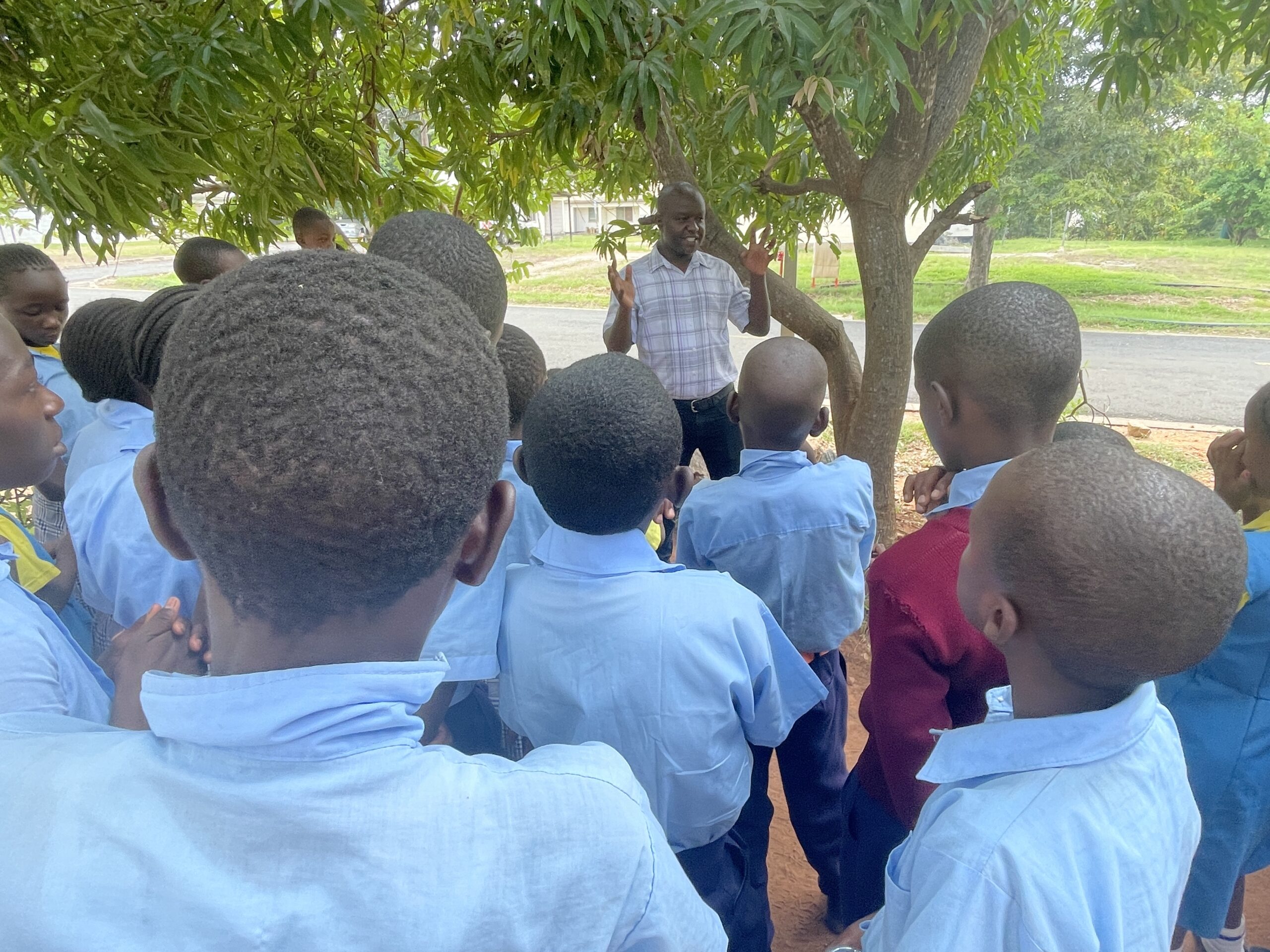
Where Trees Meet Turbines: Young Eco-Champions Earn a Front-Row Seat to Kenya’s Hydropower Engine
In Kenya’s semi-arid east, where survival is the ultimate test of both trees and tenacity, a quiet environmental movement has been taking root in schoolyards for over a decade. Now, for two standout schools from Machakos County, that commitment has opened the doors to one of the country’s most critical sources of renewable energy.
Through the Green Initiative Challenge (GIC)—a ten-year afforestation programme structured as a competitive greening effort in primary and secondary schools—the KenGen Foundation has so far engaged more than 900 schools across Embu, Machakos, and Kitui counties, alongside 28 others in West Pokot and Turkana. The initiative rewards not just participation, but performance: the top three schools in each phase earn educational tours designed to connect environmental stewardship with real-world impact.
In March 2026, that reward took shape deep within Kenya’s hydropower network.
A group of 30 students from Mbandasalama Comprehensive School, winners of third place in Phase VI, visited Kamburu Power Station on 17th March, followed closely by 30 students from Mbingoni Comprehensive School, top performers in Phase VII, who toured the facility on 18th March. Each group was accompanied by ‘green teachers’ and their principals, underscoring the programme’s emphasis on mentorship and shared learning.
Kamburu Power Station forms part of Kenya’s broader hydropower backbone and KenGen PLC power production pipeline, and is where water, harnessed from upstream catchments, is transformed into electricity that powers homes, industries, and institutions across the country. For the visiting students, however, the experience was less about megawatts and more about connection.
Walking through the cavernous interiors of the station, where turbines hum with relentless precision, the students encountered the unseen endpoint of a cycle they had already begun in their own school compounds: planting and nurturing trees.
The visits were facilitated by Elishibah Msengeti, Principal Programmes Officer at KenGen Foundation, and Ernest Nyamasyo, Senior Communication Officer, who guided the learners through the technical and environmental significance of the facility. Their message was clear—sustainable energy begins long before electricity reaches the grid.
“Seeing the power station helped us understand that what we are doing in school is part of something much bigger,” said Mr. Joel Kikosi, a Green Teacher from Mbandasalama Comprehensive School. “Planting and caring for trees is not just about our school environment—it supports water systems, and ultimately, power generation. This visit has made that connection real for both teachers and students.”
That connection lies at the heart of the GIC model. In regions where erratic rainfall and harsh conditions challenge both agriculture and afforestation, the programme encourages schools to adopt innovative tree-growing techniques while fostering environmental responsibility among students. Over time, these small, carefully tended woodlots contribute to broader ecosystem restoration—improving water retention, stabilizing soils, and supporting the very hydrological systems that feed Kenya’s dams.
For the students from Mbandasalama and Mbingoni, the tours offered more than a reward—they provided a glimpse into the tangible impact of their efforts. The trees they nurture today are part of a larger environmental equation, one that links rural schoolyards to national infrastructure.
As the Green Initiative Challenge continues to expand its footprint, blending competition with education and long-term sustainability, it is cultivating more than just green landscapes. It is shaping a generation that understands the delicate balance between nature and development—and their role in sustaining it.
From saplings in semi-arid soils to turbines deep within Kenya’s hydropower stations, the message is taking hold: the future of energy, like the future of the environment, begins with knowledge—and grows with care.